
Full Synchronization
Assassin's Creed Mirage lays the groundwork for a much more interesting game

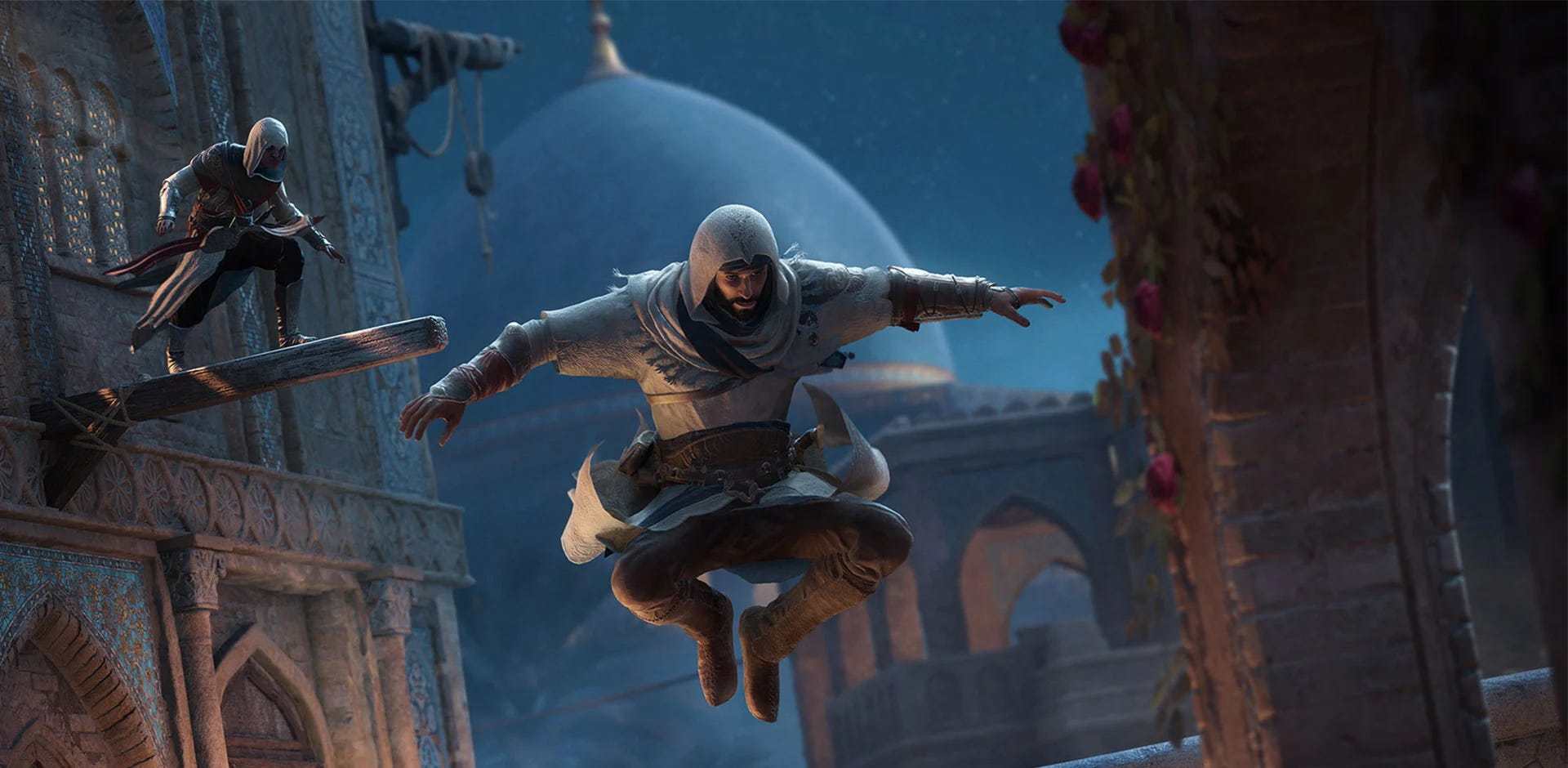
I’ve recently started playing Assassin's Creed Mirage, and wouldn't you know? It's pretty good! Ubisoft’s historical-with-some-caveats sandbox open world franchise is the one true guilty pleasure of mine, a series of games that, flaws and all, I hungrily lap up.
I thought Valhalla was one of the best written RPGs of this generation. I think Unity is a broken treasure that captures beautifully a volatile and fascinating era of French history. I like the sci-fi nonsense! I think it ties together a lot of the immersion-breaking quirks of the series nicely, and I made a whole video essay about that quite some time ago.
I don't expect you to be swayed by any of this. I’m talking about it as a primer for where I stand with the series, so that you know that I am one of its biggest shooters, and with that in mind, that I too am frustrated by the kernel of something much more interesting I find within its walls.
I haven't played enough of Mirage to judge where it will stand within the pantheon of this now-expansive franchise. I know it's considered a minor work, built as a stop gap in the lead up to this year’s larger and more ambitious Assassin's Creed Shadows.
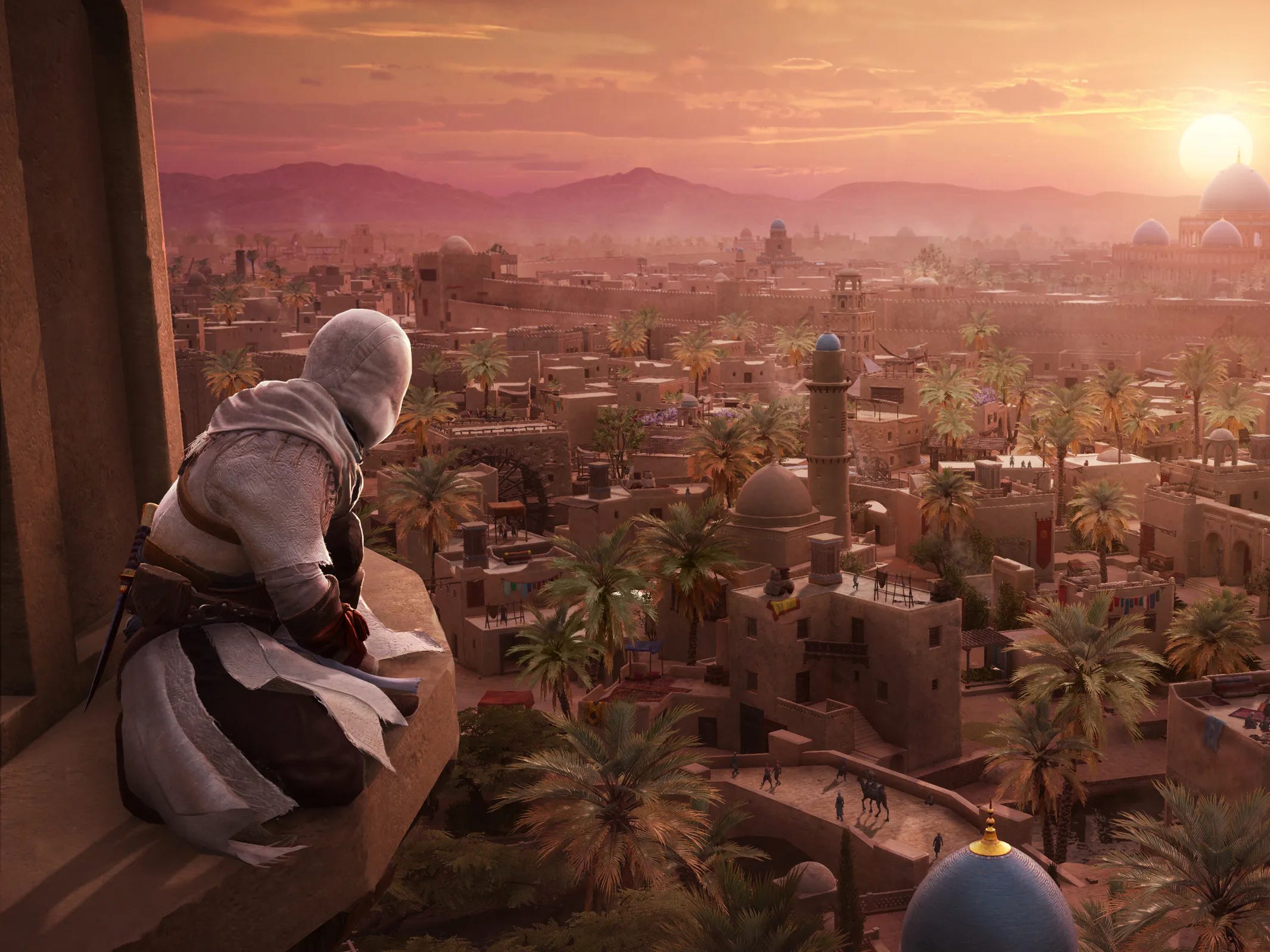
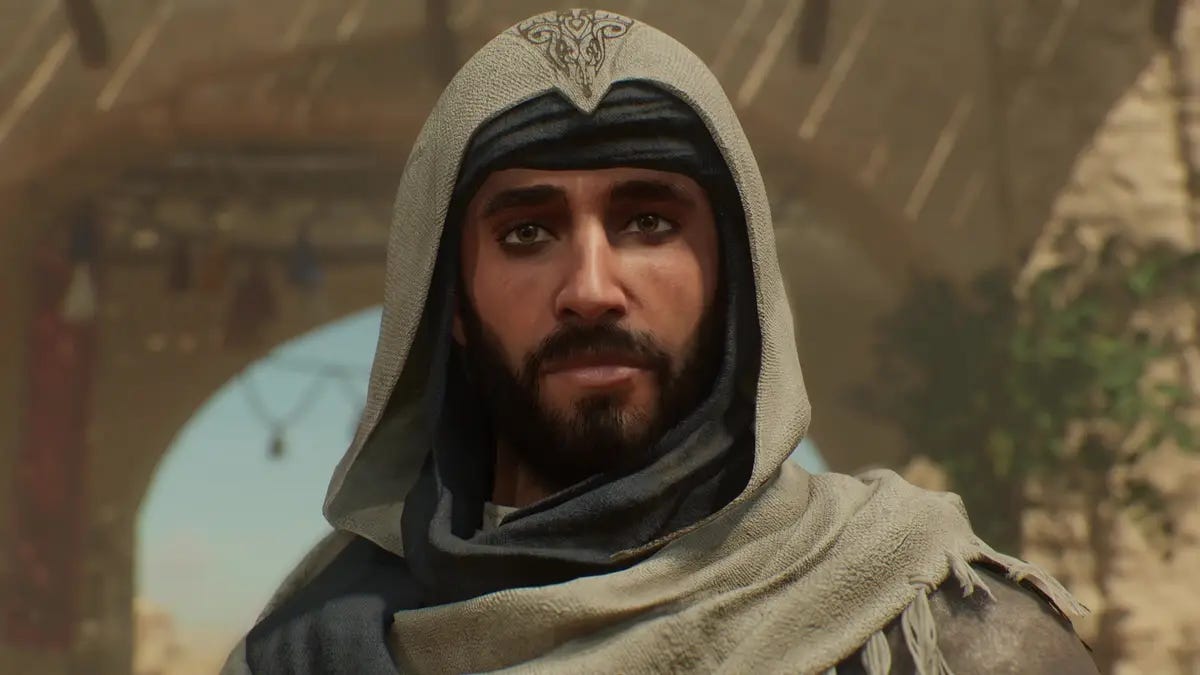
However, what I have played has brought a smile to my face. Basim ibn Is-Haq is an immediately charming protagonist, evoking Ezio di Auditore in his youthful cheek and brash emotional state. The setting of 9th century Baghdad is a fascinating portrayal of a space and time seldom represented in popular media, and by all accounts the game's presentation of Muslim culture and tradition is incredibly authentic.
But the thing that has spurred me to write this piece is not the setting, or the story, or even the meta-framework of the series as a whole. What inspired me to write this was an option in the main menu when you first start the game.
Assassin's Creed Mirage, in a first for the series, gives you a toggle for permadeath, named Full Synchronization. Added in a recent update with the intention to be utilised by those already familiar with the game, this is a bizarre addition to throw at you before you've even laid hands on the character you will be playing as, but as a difficulty status, it provides an interesting bit of friction:
Should you die, or commit any illegal actions, your save file will be deleted, you will have to start the game from the beginning.
Obviously I didn't pick this option. I don't come to Assassin's Creed for the challenge any more than I go to From Software games for a kiss and a cuddle. But its inclusion has had me thinking about what kind of game I will be playing, an expectation set by this optional modifier offered to you before you’ve even gasped your first breath.
Two things come to mind because of this: How long is the runtime of this game? And how difficult is this game going to be compared to previous entries?
The first is easy enough to answer, a cursory web search suggests anything from sixteen to thirty hours depending on how thorough you want to be. Looking at the results of folk online’s attempts at Full Synchronization, it’s around the 8 hour mark.
The second question is a little more complicated to answer.
Assassin's Creed is not the most challenging sequence of games on the market. They practise galaxy brained ideas in their narratives but the day to day mechanical side of things has been a relatively frictionless experience. It's one of the big marks against it, especially in an era where we have excellent stealth games like the Dishonored and Hitman trilogies. What, then, does Assassin’s Creed have to offer the seasoned gamer who wants a little more spice on their dinner?
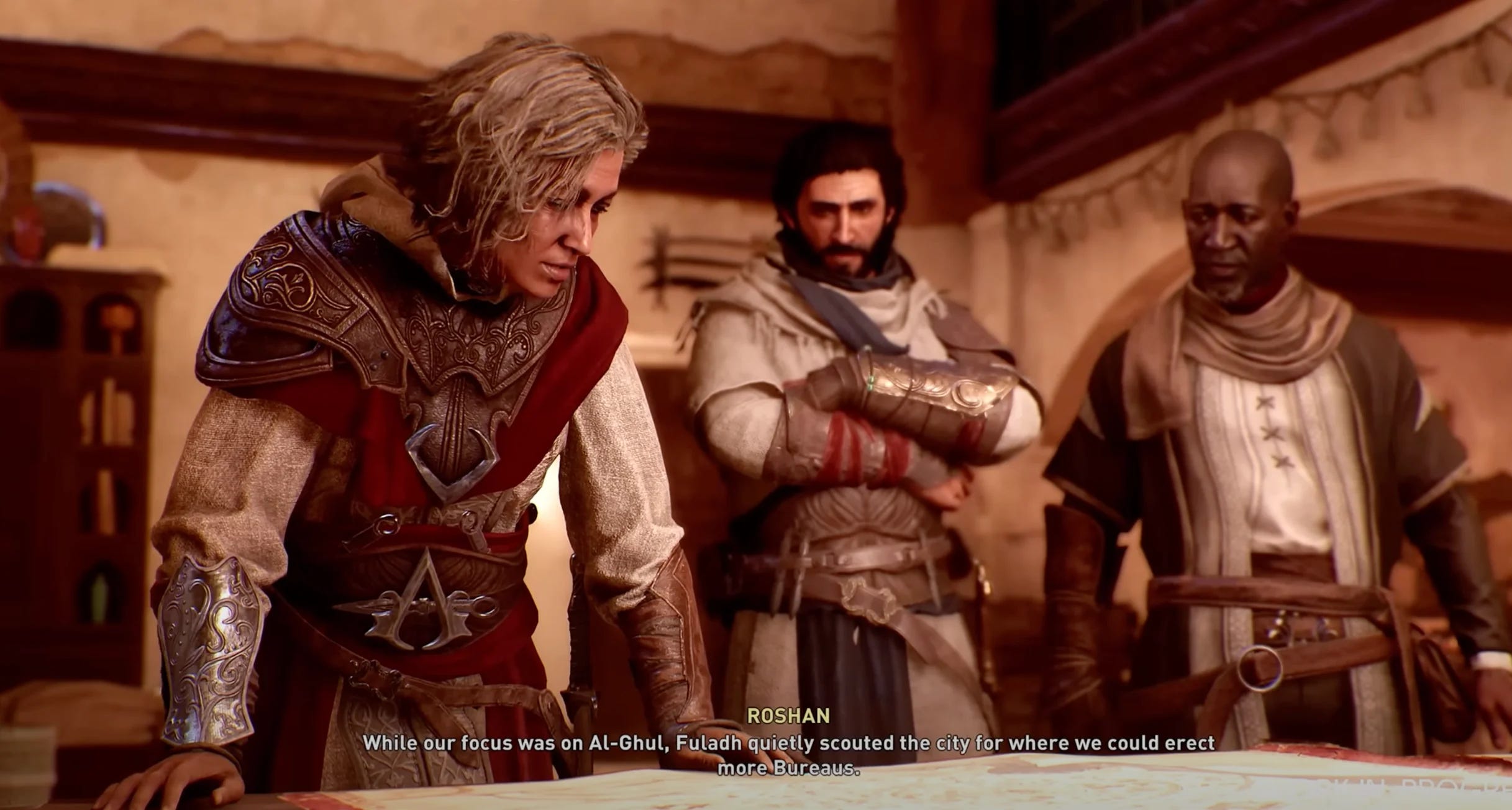
What I've played of Mirage so far is not what can be considered representative of the game as a whole, I've basically completed the tutorial, and a few basic missions setting up the general loop of the game. Stake out a location, find out information, put things together to identify your target then create around them the circumstances of their demise.
It’s already clear that this time round a lot more thought has to be put into your approach, because while stealth is as straightforward as its always been, combat is a lot harder. There’s no block button, no counters. The timing on the parry window is not so straightforward to master and enemies attack hard and fast. The intent here is clear: Stay in the shadows if you value your life.
In many ways Mirage is evocative of the original title. Those first baby steps into a genre that has come to dominate the triple A landscape, where the experience was built around these tightly curated concentric circles of observation, infiltration, sabotage, assassination and escape.
Those loops never truly vanished as the series evolved, they just became more sophisticated in how they hid themselves. Here in Mirage, this element of returning to tradition is both extremely welcome news for a fan base at risk of franchise fatigue, and also, sadly, the ground work for what could have been a much more interesting game.
This permadeath idea, presented so bluntly to you at the start screen without so much as an ounce of context for what it would actually entail, is not the catalyst for any of these thoughts, but it has reminded me of ideas I've been having about where this series could go were it not so deathly afraid of scaring the hoes.
And so I present to you, dear viewer, a what if scenario.
Picture this: you are a young initiate in the order of the hidden ones. Plucked from the streets by the keen eye of a master assassin, you are trained in the art of combat, the skill of hiding in plain sight, the ability to take lives deserving of such a permanent fate with no witnesses, sometimes even without anyone noticing any wrongdoing.
These are skills not easily earned. You must train. And train. And train. You test your mettle against some of the great warriors of your time. You run obstacle courses and trial gauntlets to prove not only your devotion but your worth as an assassin, as someone who can be relied upon to get the job done.
One final test sits in the way of your initiation, and this is a real test. You must execute it with perfect precision, demonstrate that you understand the fundamental tenets of the game’s design and then, and only then, will you be allowed to start the game proper.
The rest of the experience would be tied to a single target. You would navigate a bustling city, eavesdropping, pickpocketing, gathering clues to the identity and location of your target. You make a plan, you account for variables, you scope out an exit in case things go wrong. You need to be prepared for any eventuality because the consequences here are far more dire than you could imagine.
If you die, that's it. Everything resets. The layout of the city, the nature of the target, the options available to you. It'd basically be the Spelunky of stealth games. An experience designed to make you feel utterly incredible the moment you finally take down your target, because it is truly earned through skill, not just awarded to the player for following instructions.
I can’t imagine this idea working in the exact framework of the AC series as it stands now. These games are far too narrative heavy, they are built around establishing relationships and existing in these worlds for dozens of hours, to the extent of becoming intimately familiar with the topography and the powers that be. But as an additional mode, or a smaller project on the side? There could be something interesting there.
I know the idea of a constantly shifting cityscape might seem like a bad fit for a series renowned for its attention to detail, its expansiveness and its lavish, bespoke art direction, but the idea for this came from the indie sphere.
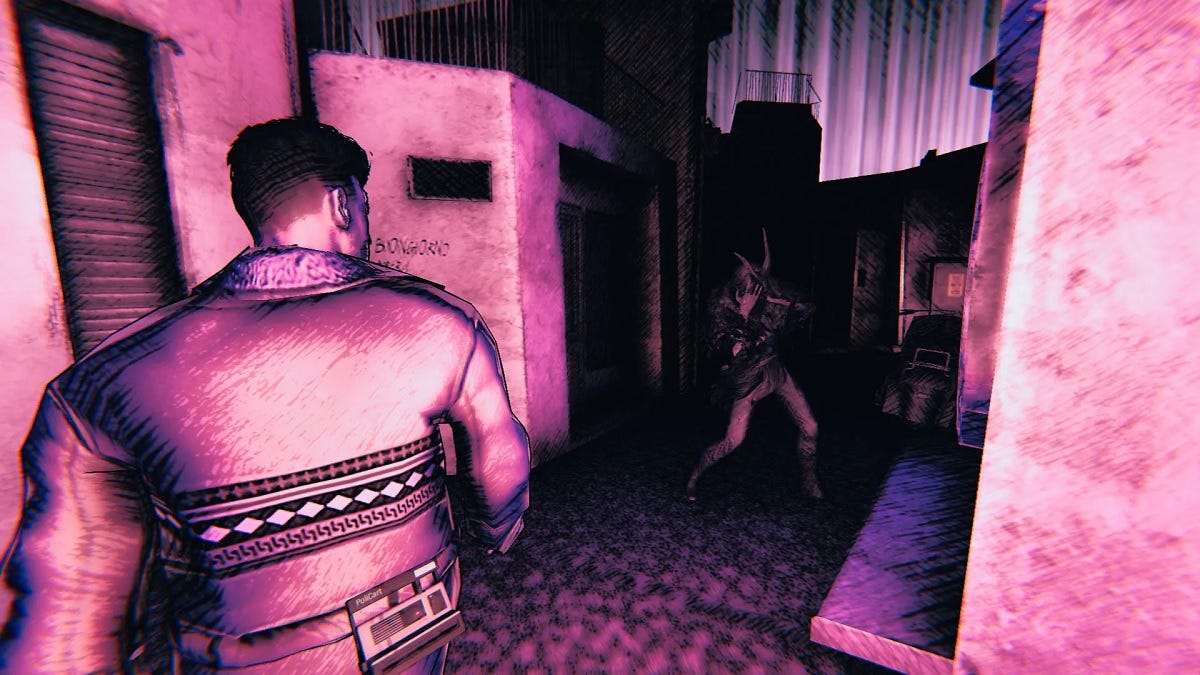
Saturnalia, a gorgeous Italian survival horror game that came out a few years ago, rearranged its town any time the player died to prevent them from growing acclimated to the layout, ramping up the tension and allowing the game to remain scary even with some time under the player’s belt.
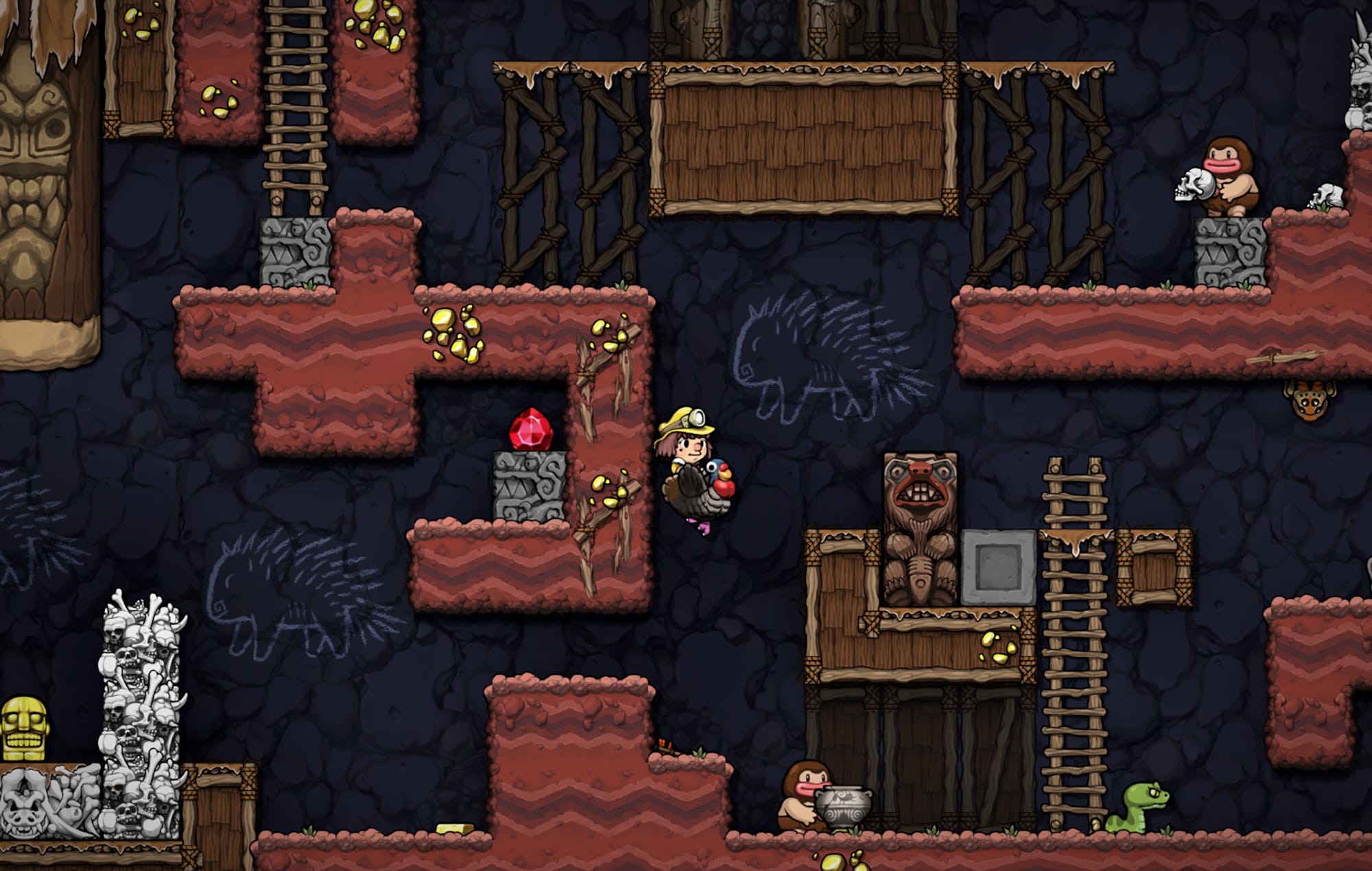
Even Spelunky, as mentioned, has an inspired set of algorithms that determine the layout of each level, built from interlaced chunks of world that ensure there's always a route to the exit, but that you never really quite know what's waiting for you along that journey.
This isn’t the only option we could explore for this. Perhaps a more subtle change of circumstances, changes in the makeup of the target’s movements, their security arrangements, the types of clues you could find on a more static map.
The Hitman World of Assassination trilogy gets a lot of mileage out of its levels due to how they are designed. Core missions are supplemented by an array of alternate contracts, modifiers and ways the game switches things up to make familiar spaces brand new once more.
And although I haven't played it, the games also have a Roguelikes ‘freelancer’ mode which pretty much proves that this idea would work.
You could even go full roguelike, in the actual, traditional sense of the term. The player’s abilities, their in-game strengths and weaknesses, as well as the way that their arsenal interacts with different elements of the world determined by chance allocation rather than being built in from the beginning.
Maybe one player can climb faster and jump further, giving them an advantage at a distance. Another could tank hits from their foe a lot more before shuffling off this mortal coil. Perhaps there could be ways in which the player could pit different factions in the city against one another to create pockets of chaos or even thin out the herd to get easier access to the target.
Earlier Assassin's Creed games were already doing things like this, poisons to turn guards against one another. Smoke bombs and projectiles and varied weapon loadouts that changed up the very nature of the player's methods of interacting with the world.
I know this is a lot of hot air coming from a starry eyed dreamer who has no idea how to make games, but it seems like a lot of what I’m proposing here could be feasible within the existing framework of the series. The trials and tribulations of being a fan of a big budget game series is that ultimately you’ll never quite see the most interesting version of the thing being made.
There's too much on the line to risk pushing any potential audience away any further. And it's a real shame in this case because Assassin's Creed has always pushed the boundaries of its own ideas. The sheer fact that Mirage is a game fully entrenched in this very specific cultural identity is testament to this.
I love the Assassin's Creed series. I always have. I am in thrall to Ubisoft’s dedication to identifying a very specific place and time in history to feed their narrative ideas, but they've always fallen a bit short when it comes to mechanical design, the actual act of play and how best to facilitate interesting interactions within these historical recreations they've so lovingly rendered.
And it stings, because they’ve already created a lot of the ideas, they're out there, in these worlds, just begging to be experimented with, they just need to synchronize just a little bit more.