
Paper Trail review
Newfangled Games' dimension folding puzzler is a cognitive delight


My relationship with puzzle games over the years has been a frustrating one. While I wouldn’t say that I’m a stupid man by any stretch of the imagination there is a part of me that frequently just does not get the design of puzzles.
I’ve tried my hand at all kinds, games that test your understanding of underlying rules and logic like The Witness; ones that challenge you to make spatial connections like Void Stranger; and even titles that are built around parsing different pieces of information to form connections, like the recently released Duck Detective (which is a quacking good time, if i say so myself!).
The problem I have is that I cannot tell you why I click with some games and not others. It is clear even at a glance that with the examples I’ve mentioned these titles might as well be in wholly different genres. There is nothing to say ‘this is specifically why these do not work for me’.
In spite of this, however, I do still find myself enticed whenever a new puzzler hits the scene, and with the recent release of Paper Trail, I think I’ve found a game that works to my strengths and weaknesses with the genre beautifully.
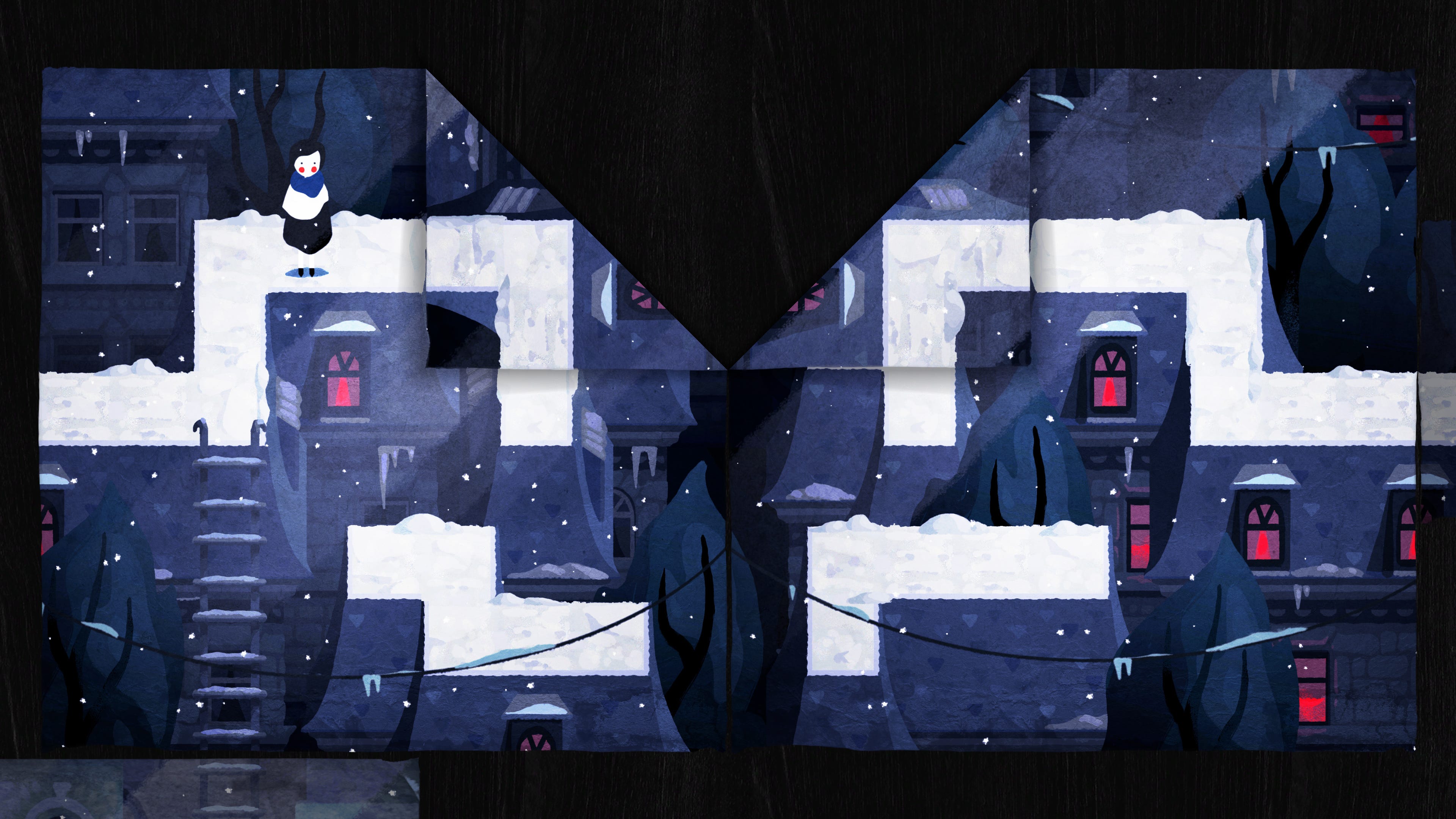
Paper Trail is a puzzle game all about folding the world. You can pull in the edges and corners of each ‘tile’ of a level to uncover hidden facets and new pathways in order to get your little avatar from A to B. Each mat has a back face, observed at the press of a button, that looks like an unassembled cardboard model kit; featuring assets that you instinctively know how to use, but in formations that don’t quite make sense until you fold them over.
Even in its most basic form, the one you see in the first few levels, this is an achievement of design that I can barely conceive. The idea is one thing, but how did they actually manage to execute it? What wizardry goes on in the minds of the puzzle designers even in this most simple iteration?
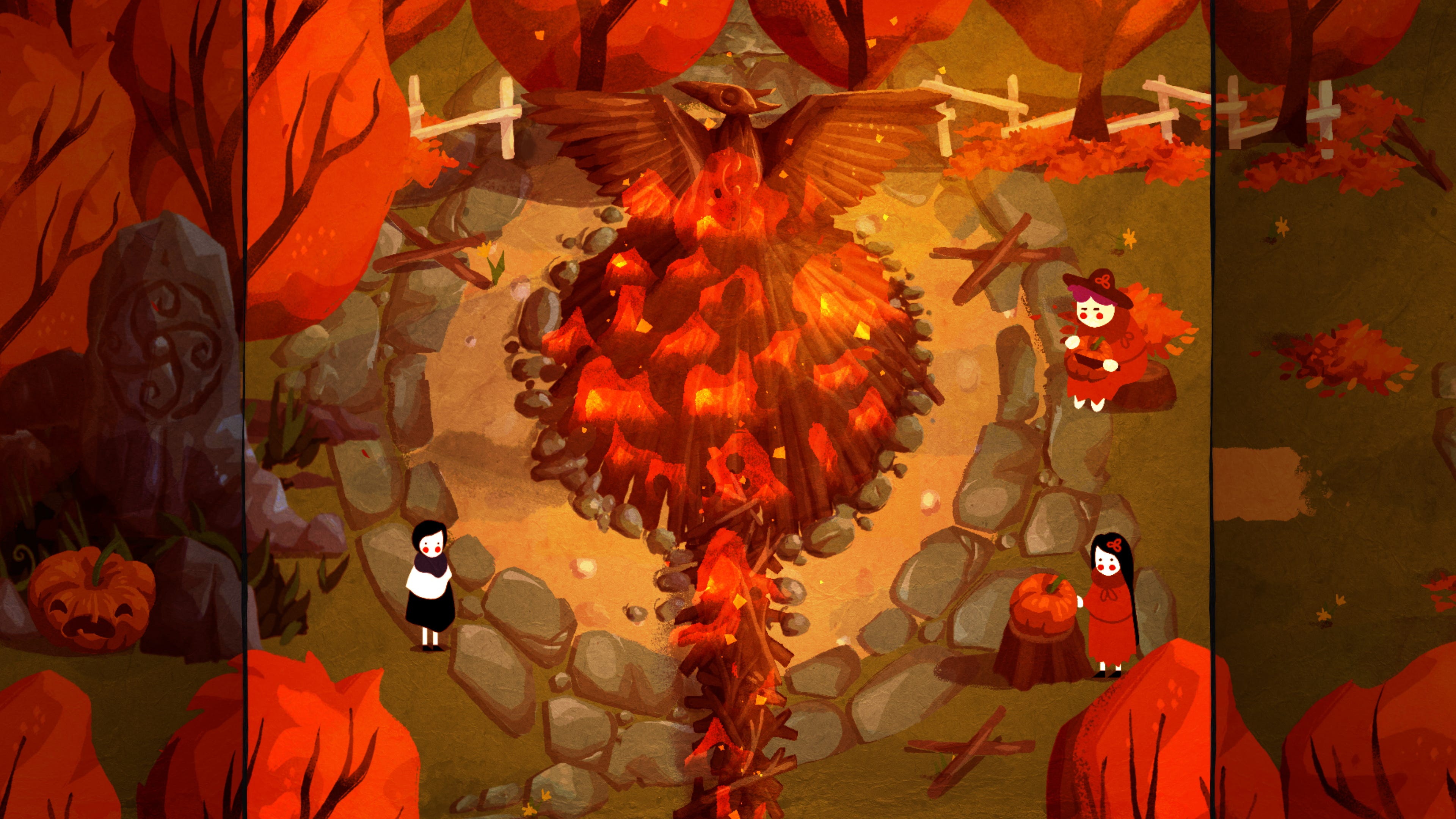
It’s an incredibly tactile system, easy to pick up and immediatly get what you need to do. I played it on a Switch Lite, but it’s pitch perfect for any touch screen device; swiping your finger to fold pages over in different ways, simple prods across the game space allowing you to navigate this world one paper puzzle at a time.
Were it to simply rest on these laurels, it would be well regarded as a smart and easily accessible little puzzler. A crowd pleaser. A magnificent little time sink, good as a palate cleanser for a weekend or two. Almost immediately, however, it becomes clear that Paper Trail is not content with simply milking it’s central mechanic for all it’s worth. Paper Trail is doing something more fiendish.
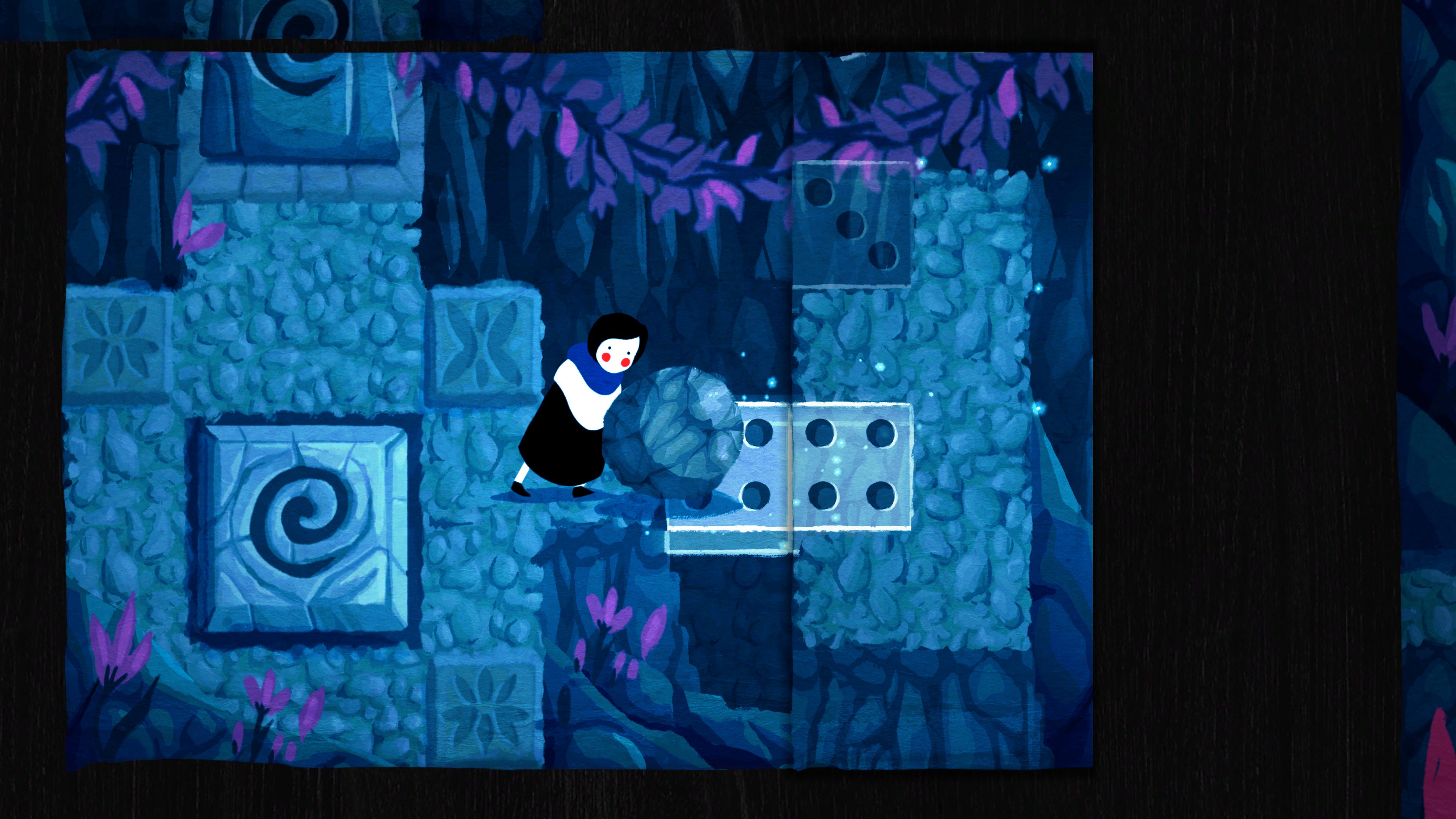
Early on the game starts to introduce sokoban elements to the mix. If you’re unfamiliar with the term, this is a genre of puzzle game built around pushing blocks into spaces in a specific sequence, found in games like the previously mentioned Void Stranger, Stephen’s Sausage Roll and Patrick’s Parabox. It’s an immensely popular subgenre that is immediately gratifying to see redefined by the canvas here.
In Paper Trail this mechanical paradigm takes the form of statues and pressure plates, which in itself are made more interesting by the already established origami-esque navigation puzzles, now complicated further by the fact that statues behave a lot like the player character. They get in the way.
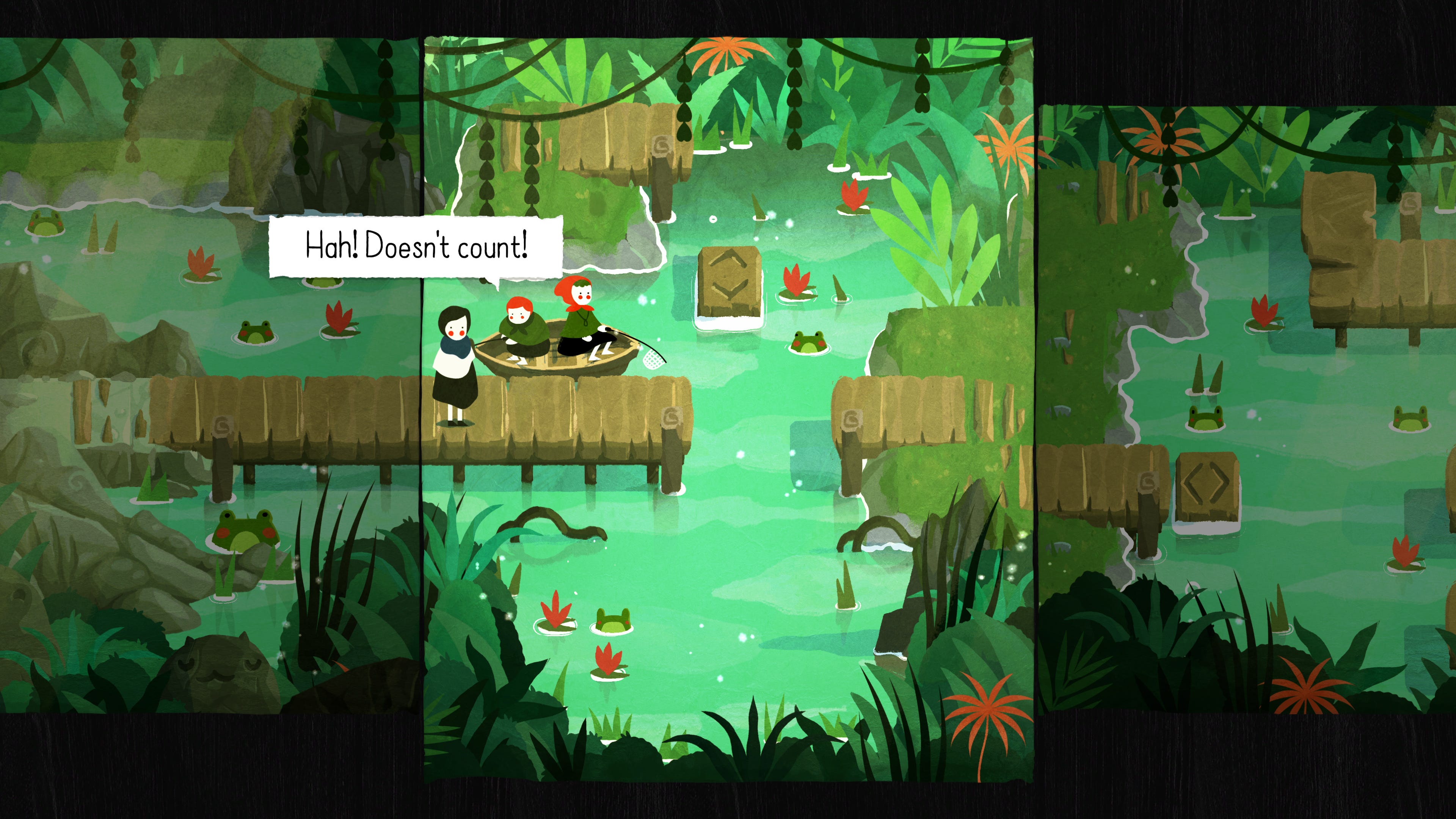
A lot of the game’s evolution of design centres on how these new elements are dropped in and mixed into the base game. One more thing you have to think about while you’re already racking your brain, a path mapped out perfectly if not for this one thing stopping you from fully folding the page, or connecting a bridge or even simply moving on by, but it’s all done in a way that’s designed to sit neatly in the same pocket. Scribbled roughly in the margins of a notebook so that you’re always placing it somewhere in your plans. It makes the puzzles smarter, and it makes you smarter for having dealt with it.
The delivery of all this is beautifully sophisticated. While I struggled with figuring out the bigger picture of some of the game’s spatial conundrums, it was never a forest for the trees scenario, and I was often delighted at how naturally I factored in these additional elements into my plan of action.
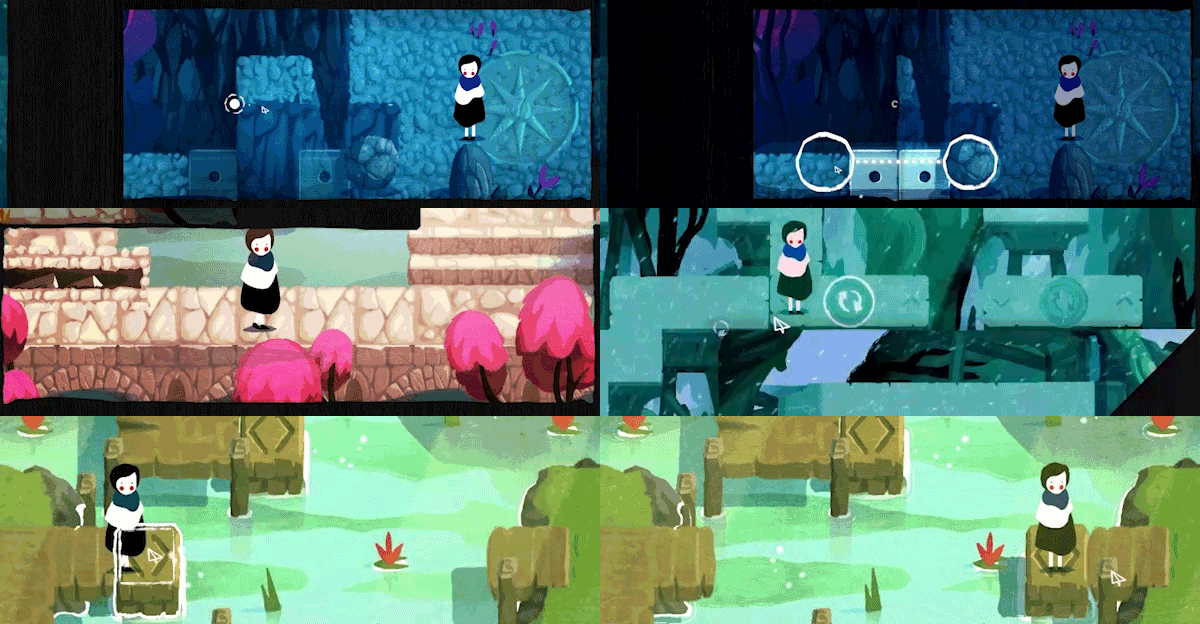
Every puzzle in the game in its most basic and primal state works beautifully in conversation with those that bookend it, and in many instances ideas expand outward in small digestable ways, with additional routes to identify in order to collect a series of origami pieces, the game’s optional collectable of which I still have many to seek out.
These end up being puzzles within puzzles that often require you to completely rethink your approach to the map in question, adding yet another layer of galaxy brain to the impossible task of figuring out how the hell Newfangled Games’ even came up with all this.
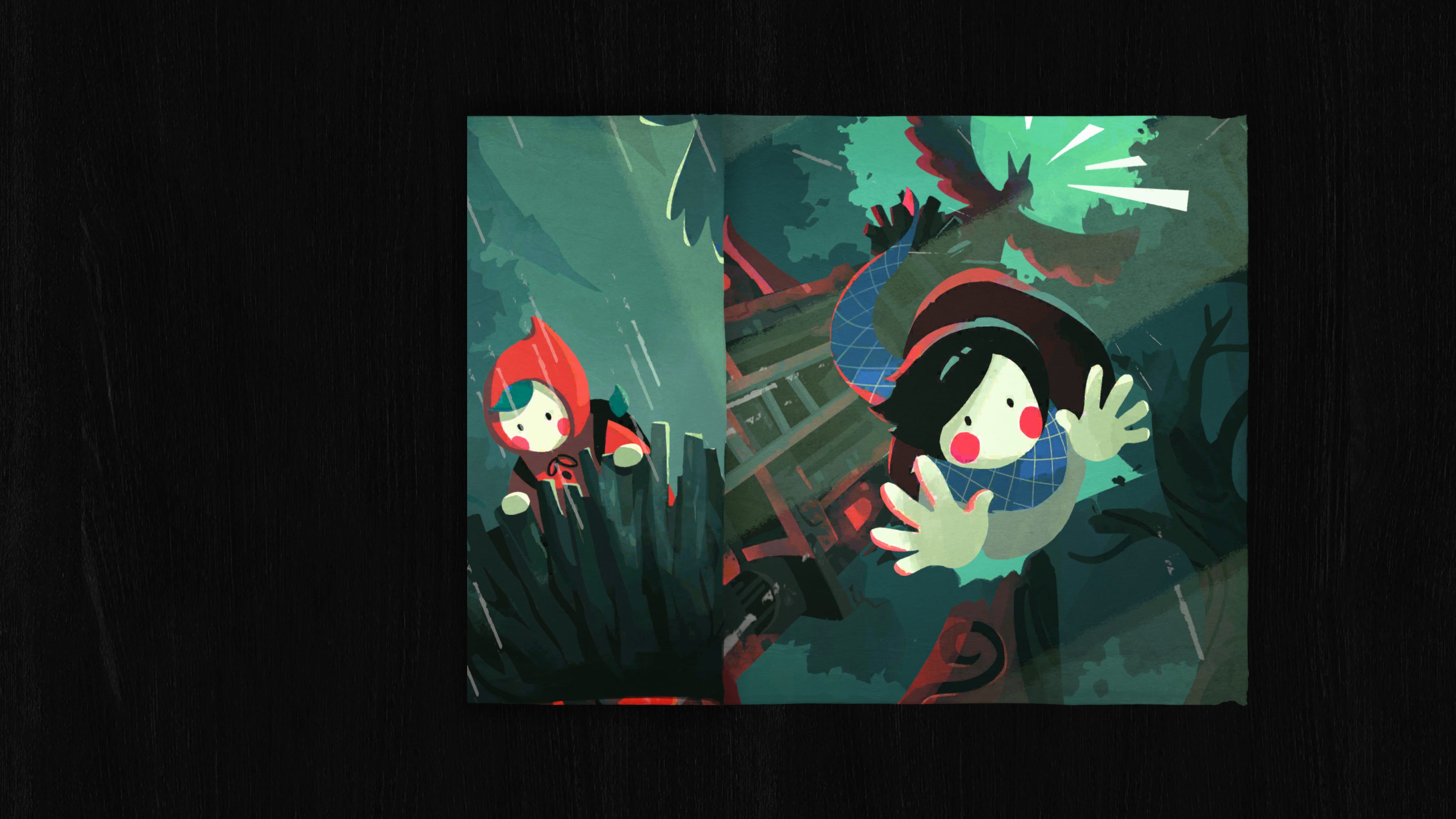
The game’s gauntlet of mysteries was surprisingly more substantial than I was expecting, but even by its well earned conclusion it still managed to keep up with this balance of ideas. Not an ounce of fat is to be found anywhere in Paper Trail.
In fact, I’ve found it hard to find fault in anything that Paper Trail does. I can’t really call it a perfect game because that itself is an idea mired in inconsitent criteria and obnoxious hyperbole. In the same breath, however, there really is nothing here that I would do differently; nothing that I would ask it’s creators to adjust or amend.
If I have to find something less than stellar to comment on, I did find the narrative beats of the game to be a little weak. It’s a fairly bog standard tale of love and loss that honestly didn’t really need to be there, but it is far from critical to ones enjoyment of the experience as a whole. I found it easy enough to ignore beyond a minimal narrative thread tying these otherwise disparate levels together.
Paper Trail is a title that probably won’t feature on many Game of the Year lists. We are barely halfway through 2024 and I’ve already seen a good dozen worthy titles hungrily snapping at a place on such a prestigious list, but it will be a shame, for as a framework for brain taxing navigation puzzles, Paper Trail is an exceptional work, that accomplishes everything it sets out to do, with gusto. If you like puzzle games, you simply must give this a whirl.
Or in this case, a fold.
Images courtesy of Newfangled Games